
You Built Something Great. So Why Can't Anyone Find You?
You’ve been showing up. Posting on Instagram. Sending emails. Maybe you’ve even written a few blog posts. But when you Google yourself, really Google what your customer would type, you’re nowhere to be seen.
Here’s the uncomfortable truth: it’s not because your business isn’t good enough. Google simply doesn’t know who you’re for yet. And the way you fix that starts with one simple skill: keyword research.
Don’t let the name intimidate you. Keyword research is figuring out the exact words your dream customer types into Google when they need exactly what you offer. Once you know those words, you can show up right in front of them, consistently, without paying for a single ad.
This guide will show you exactly how to do it in 2026, step by step, using tools you can access today. By the time you finish reading, you’ll have your first five to ten keywords ready to use this week.
What Keyword Research Actually Is (And Why It Still Matters)
You might have heard people saying “SEO is dead” or “AI is taking over search.” There’s some truth in there, but it’s being wildly overblown.
Yes, tools like ChatGPT, Google’s AI Overviews, and Perplexity have changed how some people find answers online. For super-simple questions like “what’s the capital of France,” Google now just answers it on the page and no one clicks anywhere. But for anything that requires real depth, comparison, and expertise? Real humans still click, still read, and still buy.
Think about how you search yourself. When you’re looking for a physiotherapist in your suburb, or you want to know which accounting software suits a business your size, or you’re trying to figure out why your café’s foot traffic drops every June, you don’t just want a one-line answer. You want to read something written by someone who gets it.
Research from Semrush confirms that long-tail queries, the detailed and specific ones, still drive strong click-through rates even when an AI Overview appears on the page . The content that gets skipped is thin and vague. The content that thrives is useful, specific, and human. Keyword research is how you make sure your useful content gets found.
The Big Mindset Shift: Stop Searching for Keywords. Start Listening for Problems.
The old approach was to open a tool, find a word with lots of monthly searches, write an article about it, and hope Google noticed.
The 2026 approach works like this: ask yourself what problem your customer is trying to solve, then find out how they describe that problem in the search bar.
A nutritionist in Melbourne doesn’t just offer “nutrition services.” Her clients are Googling things like “why am I so tired all the time” or “what to eat to balance hormones naturally” or “meal plan for busy mums who work full time.” Those phrases tell you far more than the word “nutrition” ever could.
A tradie in Brisbane isn’t just a “plumber.” His customers are typing “emergency hot water repair cost Northside Brisbane” or “why is my water pressure low in an old house”. Specific. Problem-driven. Ready to hire.
When you start thinking this way, keyword research becomes customer empathy with a strategy attached.
Understanding What Your Customer Is Really Asking (The 4 Types of Search Intent)
Before someone buys from you, they go through a few different stages. At each stage, they type something different into Google. Understanding this will completely change which keywords you choose to focus on. Think of it like the journey from awareness to purchase: first there’s curiosity, then comparison, then commitment.
🔍 Informational — “I’m just learning”
These searchers want to understand something and aren’t ready to buy yet. A yoga studio owner might attract these with content like “what is breathwork and how does it reduce stress?” or “difference between yoga and pilates for beginners.” This type of content builds your authority and trust over time .
🗺️ Navigational — “I already know you”
These are people looking specifically for you. They type your business name, your course name, your address. You don’t need to do much to win these searches; you just need to make sure your website exists and is easy to find.
🤔 Commercial — “I’m comparing my options”
These searchers know they need something; they’re just deciding who to buy from. Think: “best bookkeeping software for tradies” or “top marketing coaches for female founders Australia.” Commercial keywords are highly competitive but incredibly valuable . Most businesses neglect these entirely.
💳 Transactional — “I’m ready to buy right now”
These searchers have their wallet open. They type things like “book a facial Melbourne CBD” or “enrol in online branding course.” These are the keywords connected to your sales pages, your booking pages, and your offers.
The mistake most small business owners make is only ever writing informational content because it feels easier, and never creating content for the commercial and transactional stages, where the actual sales happen . A balanced keyword strategy covers all four.
How to Do Keyword Research: Your Step-by-Step Process
Step 1: Start with What You Already Know (Your Seed Keywords)
Before you open a single tool, open a document and answer these questions:
- What does your customer ask in their first enquiry email or DM?
- What problem made them look for you in the first place?
- What do you hear most on discovery calls or consultations?
- What does your most recent five-star review actually say?
Those answers are your seed keywords, the raw material everything else grows from. A florist in Sydney might pull out phrases like “wedding flowers on a budget” or “seasonal flowers for small events.” A personal trainer might note “how to lose belly fat after 40” or “strength training for beginners at home.” Real language, from real customers.
This step costs nothing and takes 15 minutes. Don’t skip it.
Step 2: Use Free Tools to Expand Your List
Now take your seed keywords and run them through these free tools to discover dozens of related phrases you’d never have thought of on your own.
🔧 Google Search Bar — The Simplest Tool You Already Have
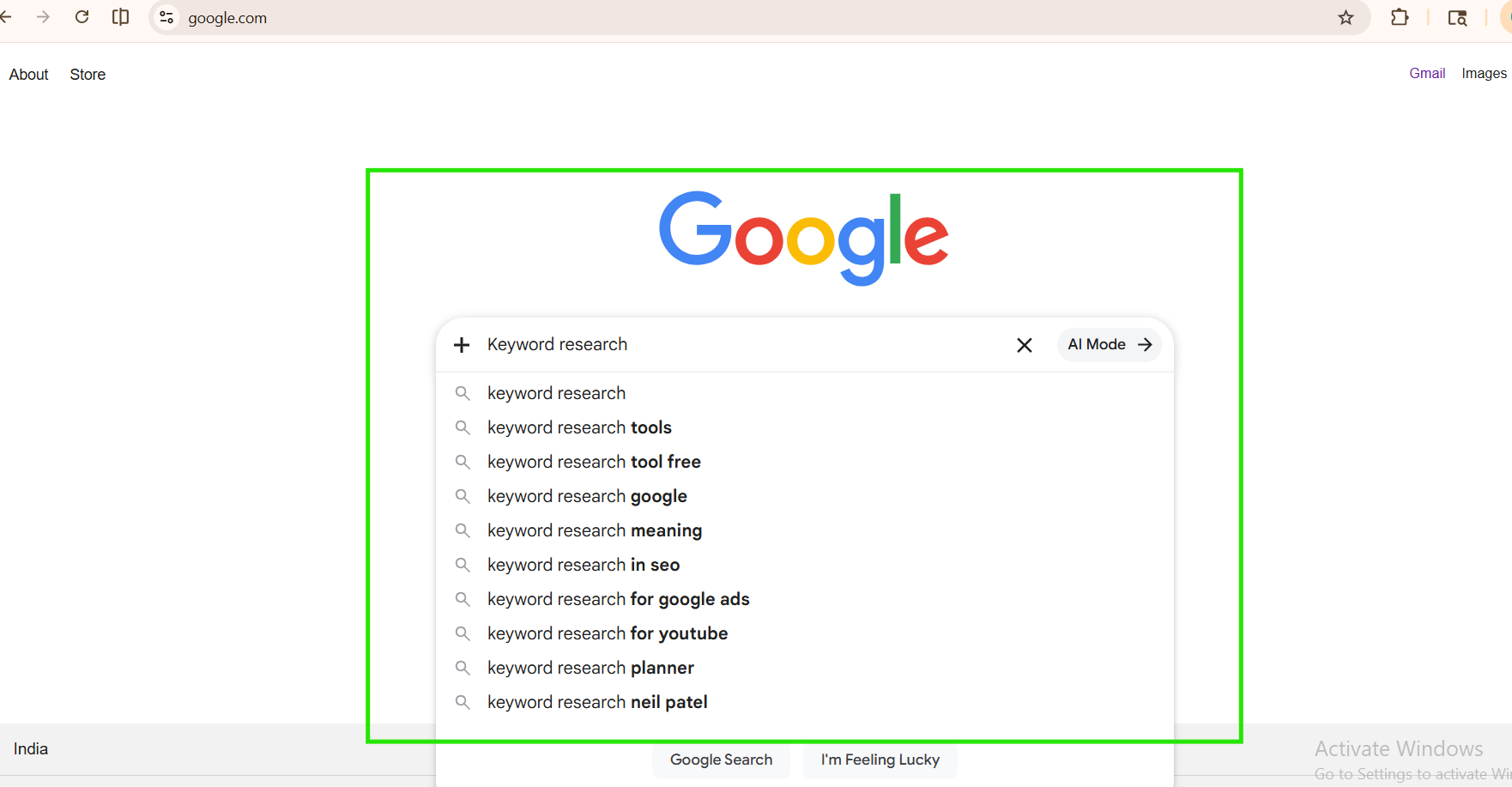
Start typing one of your seed keywords into Google and don’t press Enter. Watch what Google suggests in the dropdown. Those autocomplete suggestions are based on millions of real searches. They are real people, asking real questions .
Then scroll to the very bottom of the results page. You’ll find a section called “Related searches,” another goldmine of variations on your topic. A café owner typing “best coffee for cold brew at home” might discover people also search for “cold brew vs iced coffee explained” or “coffee subscription boxes Australia,” both potential content ideas that could drive new visitors to their website.
🔧 Google’s “People Also Ask” Box — The Question Goldmine
When you do hit Enter on a search, look for the accordion box in the middle of the Google results page labelled “People Also Ask.” It’s a list of questions that real people are searching alongside your topic. For example, if a health coach searches “gut health for women,” the People Also Ask box might show: “What foods heal the gut fastest?” / “Is gut health linked to anxiety?” / “What are signs of an unhealthy gut?” Every one of those questions is a potential blog post. And because they come straight from Google, you know there’s real demand . Click on one question and more appear. You can keep going almost indefinitely.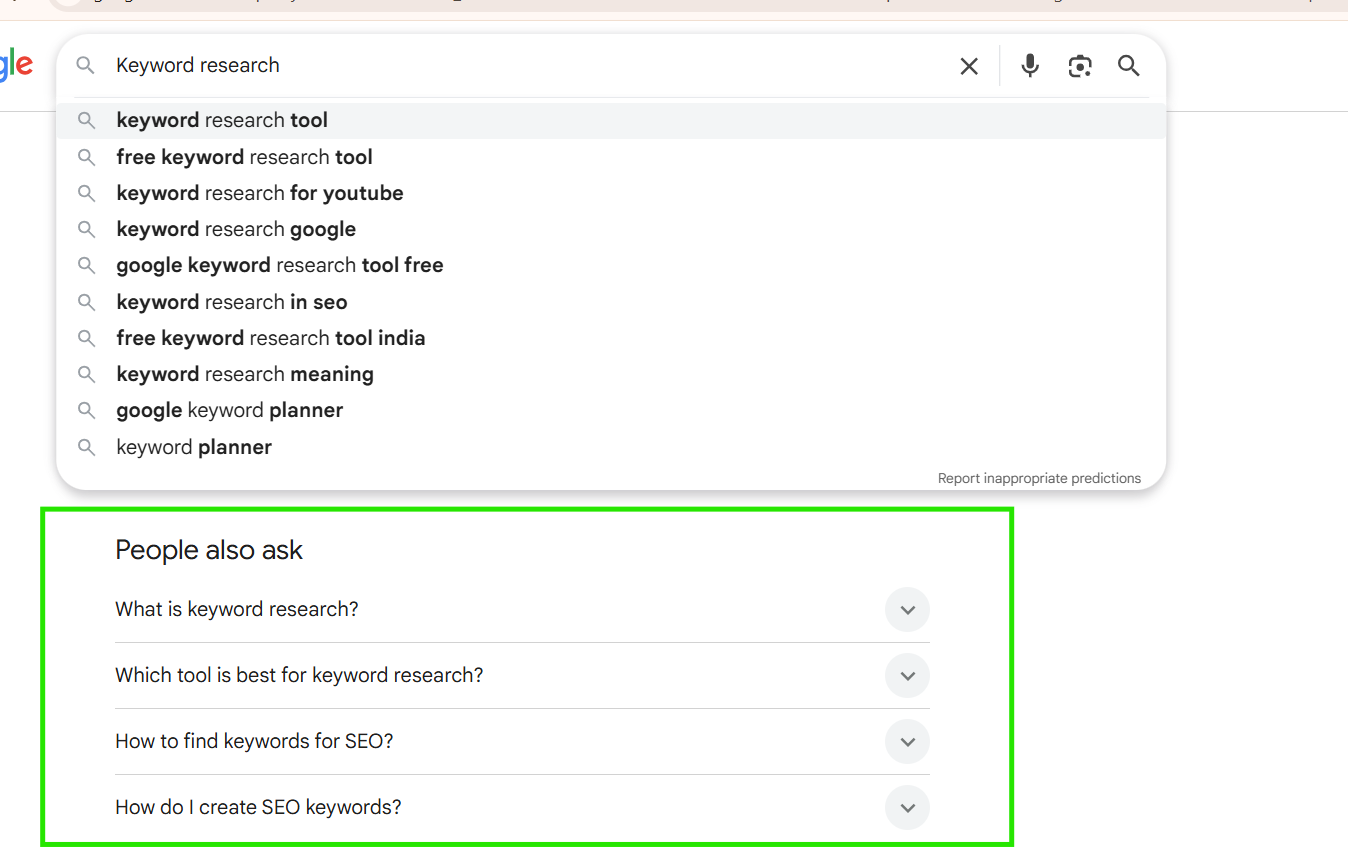
🔧 AnswerThePublic — A Visual Map of Every Question Your Customers Ask
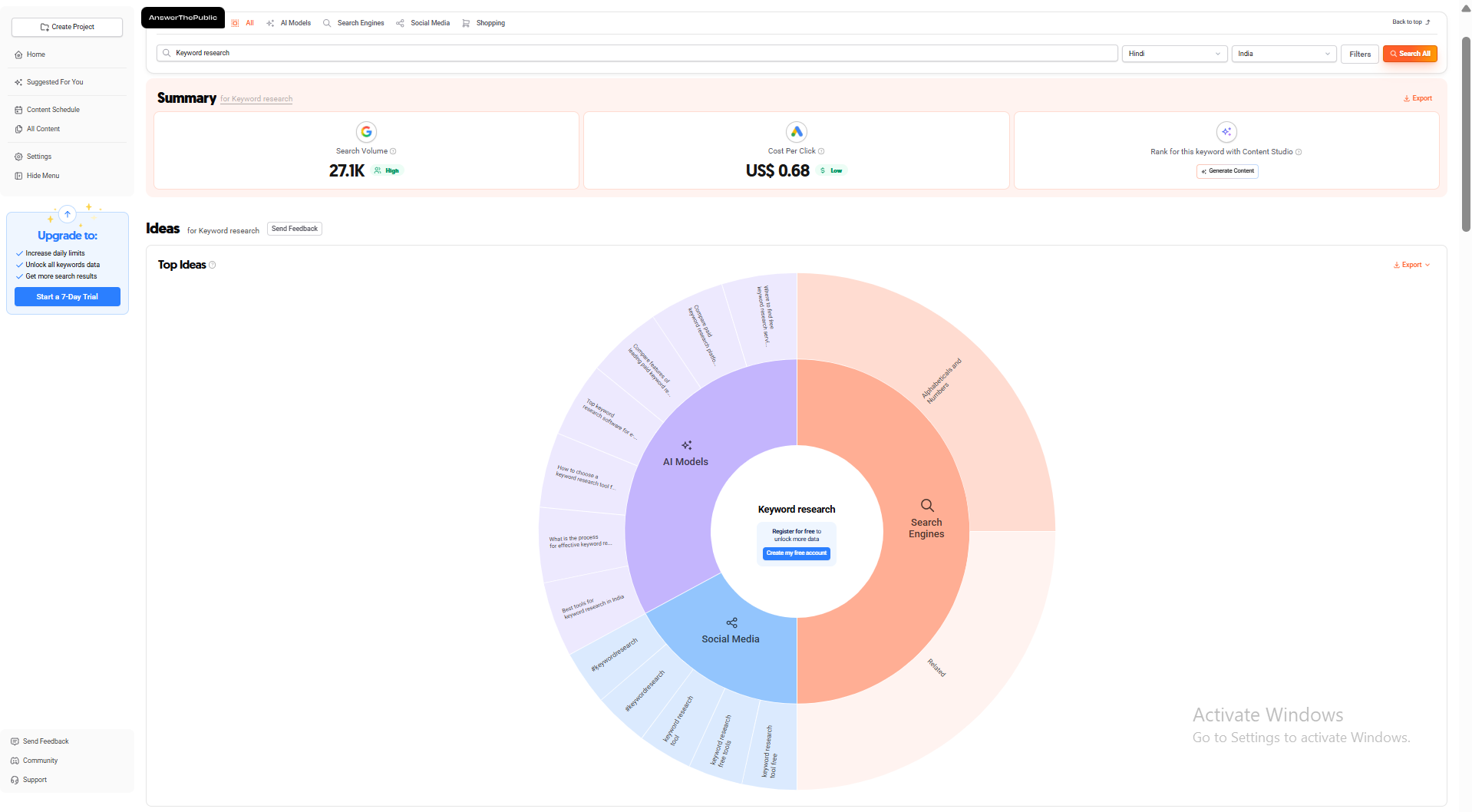
Go to Answer the Public. Type in a topic. Within seconds, it generates a visual map showing every question, comparison, and variation people type around that word, sorted into categories like “who,” “what,” “why,” “how,” “can,” and more.
It’s like eavesdropping on a thousand conversations at once. A bookkeeper targeting small business owners might type in “bookkeeping” and discover people search for “do I need a bookkeeper or accountant?” and “how much does bookkeeping cost for a small business?”, both highly commercial phrases worth writing about.
The free plan gives you a limited number of searches per day, which is plenty to get started.
🔧 Google Trends — Find Out if a Keyword is Rising or Fading
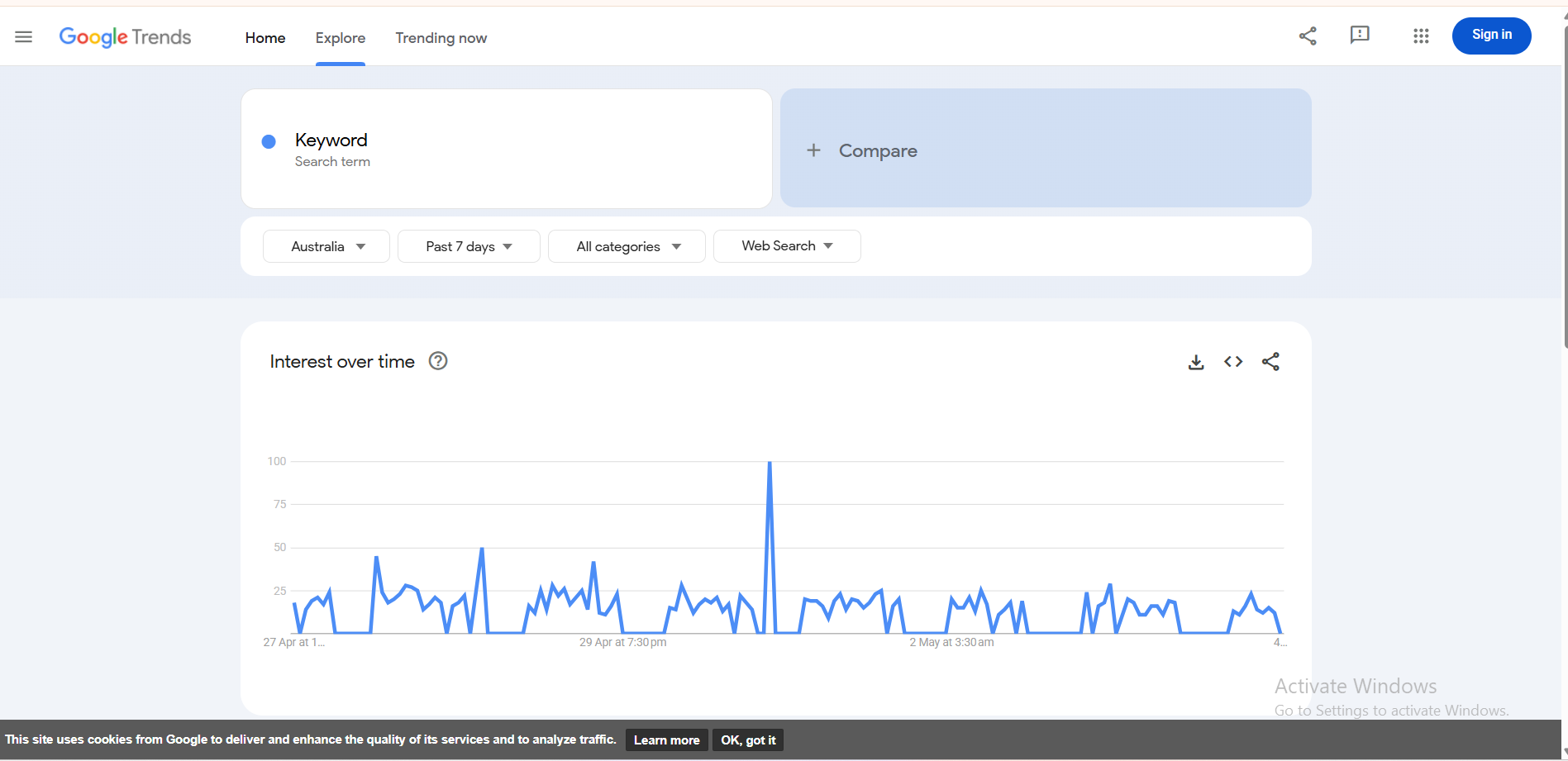
Go to Google Trends. Type in a keyword and see its search interest over time. This tells you whether a topic is growing, declining, or seasonal, so you don’t spend weeks writing about something people are losing interest in.
A swimwear brand can see exactly when Australians start searching for swimsuits (September and October, just before spring) and publish content before the spike, not after it. A financial adviser can spot that “tax return small business” surges every June and July in Australia and plan accordingly.
🔧 Google Keyword Planner — The Numbers Behind the Words
Go to Google Keyword Planner. You’ll need a free Google Ads account to access it, but you don’t need to spend a single cent on ads. This tool shows you estimated monthly search volumes and how competitive a keyword is for paid advertising, which is a useful proxy for commercial intent.
A word of warning: Google Keyword Planner shows volume ranges rather than exact numbers, for example “1K to 10K searches per month.” Treat it as a compass rather than a GPS. It’s still invaluable for separating the high-interest phrases from the ones almost no one searches.
Step 3: Filter by Intent and Opportunity, Not Just Search Volume
This is where many beginners go wrong. They see a keyword with 50,000 monthly searches and immediately want to target it. But if that keyword is dominated by global brands with enormous websites and millions of visitors, you won’t rank for it anytime soon.
Look for this combination instead:
- A specific, longer phrase rather than a single broad word
- Clear buyer intent, meaning the person is looking for a solution, not just a definition
- Realistic competition, where the top search results include blog posts and small business websites rather than Wikipedia or a national chain
The single word “coffee” is impossible for a small café to rank for. But “specialty coffee subscription box Melbourne” or “best flat white in Fitzroy”? That’s entirely winnable.
A useful way to think about it: 200 visits a month from people who are genuinely ready to book, buy, or enquire will always outperform 10,000 visits from people who are just browsing.
Step 4: Check What's Already Ranking (Your 2-Minute Google Audit)
Before you commit to writing about a keyword, Google it yourself and spend two minutes reading the first page of results.
Ask yourself:
- Are the results blog posts, product pages, videos, or local business listings? The format Google already shows is the format it wants more of, so match it .
- Are the top results from huge national or international websites? If so, look for a more specific angle or a local version of the topic.
- Is there a featured snippet, the text box at the very top of the page with a direct answer? If so, you can aim for that spot by structuring your content to answer the question directly and concisely in your opening paragraph.
This manual check takes two minutes and saves you months of effort writing content you’ll never rank for.
Step 5: Group Your Keywords into Clusters (Your Simple Content Map)
Once you have a list of 20 to 30 keywords, the last step is organising them. Group related keywords together into clusters: one bigger, central topic supported by several related, smaller ones.
Think of it like a chapter book. The pillar is the chapter title. The cluster pieces are the individual sections inside it.
Example for a wellness brand:
- Pillar page (the main topic): “Gut health guide for women”
- Cluster content (supporting topics): “What foods cause bloating in women,” “gut health and anxiety connection,” “best probiotics for women Australia,” “gut healing meal plan week 1”
Showing Up Inside AI Answers, Not Just Google
When someone asks ChatGPT, Perplexity, or Google’s AI Overview a question, those tools pull from real websites and content that already exists on the internet. The goal is to become the source that gets quoted and cited inside AI-generated answers .
This is called Generative Engine Optimisation, or GEO. You don’t need to memorise the term. Just know this: the businesses that benefit most from AI search are the ones who write content that directly answers a specific question, structures it clearly with headings and short paragraphs, and builds a track record of covering their topic with genuine depth and consistency.
So when you’re writing content around your keywords, ask yourself: “If someone asked this question to an AI tool, would my article be the best possible answer?” If yes, you’re on the right track .
Question-based keywords, the ones that start with “how to,” “what is,” “why does,” “should I,” are especially powerful for AI visibility right now. A physiotherapist writing “should I use heat or ice on a sore lower back?” has a real chance of being referenced in AI-generated health answers, even without a massive website.
What to Expect in the Next 6 Months (Mid to Late 2026)
Search is moving fast. Here’s what you should be preparing for right now:
Conversational and question-based searches will keep growing. As more people use AI tools to search, they’ll type full questions the way they’d speak them out loud. “What’s the best way for a sole trader to handle BAS?” rather than just “BAS sole trader.” Your keyword strategy should be shifting towards natural-language questions.
Your business name becoming a keyword matters more than ever. Google is increasingly treating brand name searches as a trust signal. When people search specifically for you by name rather than a generic category, it signals authority. Content that puts your name and expertise front and centre, such as case studies, opinion pieces, and results-driven stories, will grow in value.
Thin, generic content will continue to struggle. As the internet fills with AI-written articles, Google is getting better at identifying what has genuine human depth and expertise behind it. Your real stories, your client results, and your specific experience are a competitive advantage right now, not just nice-to-have flavour.
Zero-click searches will rise for simple questions and fall for complex ones. If your content answers a question that can be summed up in a sentence, expect fewer clicks. If your content requires nuance, comparison, and lived expertise, expect the opposite.
The more human, specific, and genuinely helpful your content is, the better your results will be, both on Google and inside AI tools. That’s a future you can prepare for right now.
Your Keyword Research Toolkit
| Tool | Cost | What It’s Good For |
|---|---|---|
| Google Search Bar + Related Searches | Free | Your first stop for autocomplete and related searches |
| Google Search Console | Free | See what keywords your site already ranks for |
| Google Keyword Planner | Free | Estimated monthly search volumes and commercial intent signals |
| AnswerThePublic | Free / paid plans | Question-based keyword discovery for content ideas |
| Google Trends | Free | Spot rising topics and seasonal patterns early |
| Ubersuggest | From ~$29/month | Good entry-level paid option for keyword data and competitor insights |
| Semrush | From ~$108/month | Full suite: keyword tracking, competitor research, site audits |
| Ahrefs | From ~$99/month | Strong for understanding backlinks and competitor keyword gaps |
For most small business owners: start with the free stack. Google Search Console, Google Keyword Planner, AnswerThePublic, and Google Trends together give you more than enough to build a solid six months of content. When SEO becomes a clear growth channel and you want to go deeper on competitor strategy, then invest in one paid tool.
Before You Close This Tab
You don’t need a perfect keyword strategy before you start. You need five keywords and a willingness to show up.
Here’s your action step right now, and it takes ten minutes:
- Open a new document
- Write down the last three questions a customer asked you before they hired or bought from you
- Type each one into Google and check the autocomplete suggestions and the “People Also Ask” box
- Pick the one that feels most aligned with what you sell or offer
- Write that down. That’s your first keyword.
Start there. Publish one piece of content built around it. See what happens. Then do it again.
The businesses that win at search in 2026 are the ones who show up consistently, specifically, and with genuine value to offer.
That’s something you already know how to do.
Looking for a strategic marketing mentor? Book here.
Share This